Does teaching writing feel harder than it should?
Maybe you’ve asked kids to write a story, only to have them stare at a blank page. Or perhaps you’ve told them to “add more details” or “make your writing more interesting,” but their writing doesn’t seem to improve.
I’ve been there!
When I first started teaching second grade, writing was one of the most frustrating parts of my day. I’d teach a lesson, explain what I wanted kids to do, and send them off to write.
But many of my students struggled. Some didn’t know where to start, others needed constant help, and a few rushed through their writing just to be finished.
I eventually realized something important: Kids don’t just need writing assignments. They need to be taught how to write.
So I changed my approach.
Instead of trying to teach several writing skills at once, I started focusing on one skill per lesson. I showed my students exactly how to use that skill, then gave them time to practice it in their own writing.
And what a difference it made!
My students became more confident and independent, and the quality of their writing improved.
The best part? This approach works whether you’re teaching a classroom full of kids or homeschooling one child at your kitchen table.
In this post, I’ll show you how to teach writing using a simple three-step routine, what writing skills to teach, and how to help kids who struggle with writing.
1. Follow a Simple 3-Step Writing Routine
One of the best ways to make writing instruction easier is to follow the same routine each day.
When kids know what to expect, they can focus on learning and practicing writing skills instead of figuring out what they’re supposed to do.
The routine I recommend has just three steps: Teach, Model, Write.
Step 1: Teach One Writing Skill
Start each lesson by introducing one specific writing skill.
Not three or four skills. Just one!
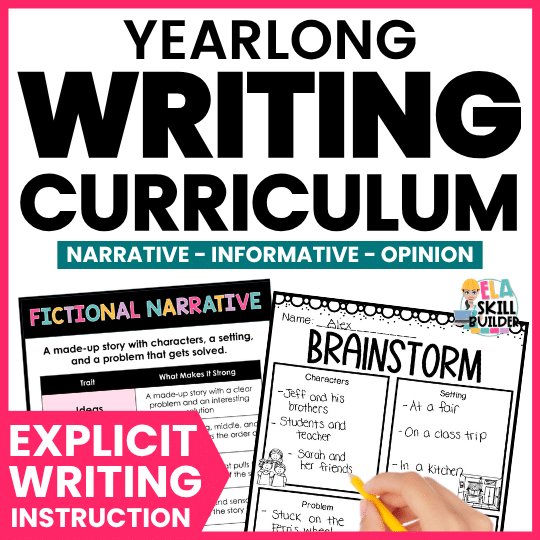
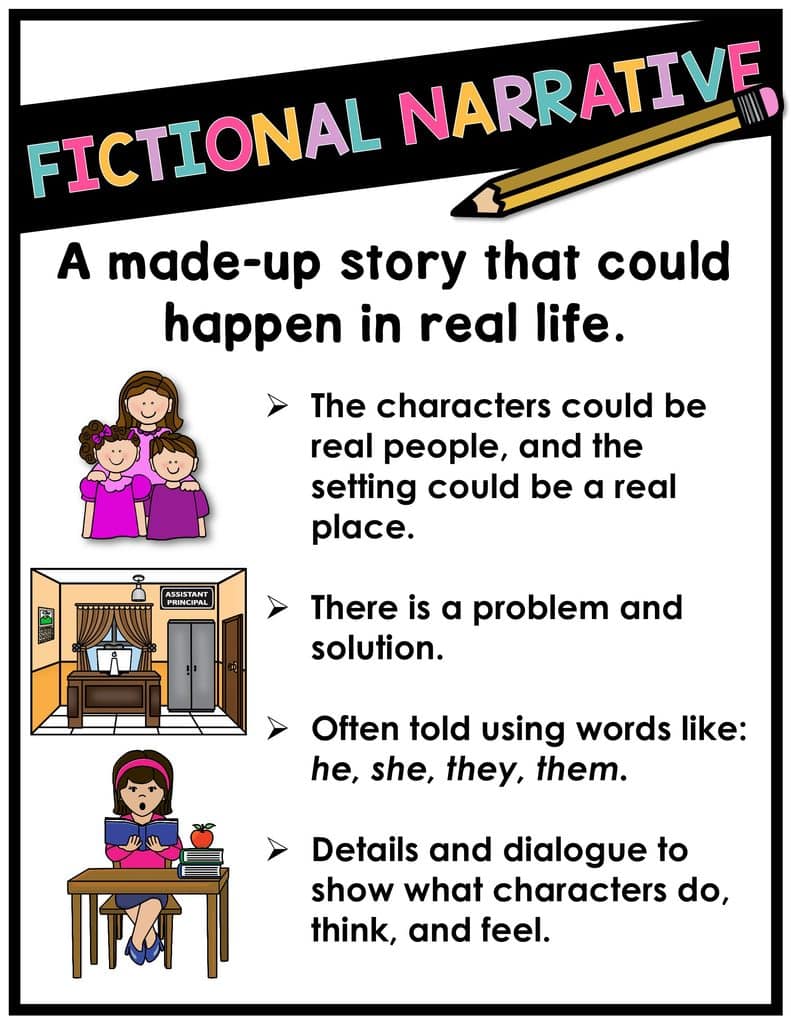
For example, if you’re teaching kids how to plan a fictional narrative, start by explaining what makes a fictional narrative different from other types of writing.
Use an anchor chart (a simple visual that explains the skill) to show that a fictional narrative is a made-up story that could happen in real life. Explain that these stories include characters, a setting, a problem, and a solution.
You can also use a mentor text, which is a published book or passage that demonstrates the skill. Read a familiar fictional narrative and help kids identify its characters, setting, problem, and solution.
The goal is to help kids understand the important parts of a fictional narrative before showing them how to plan their own stories.
Step 2: Model the Writing Skill
This is one of the most important parts of writing instruction, and it’s also one of the easiest to skip!
After explaining a skill, don’t immediately expect kids to apply it independently.
Show them exactly how to do it.
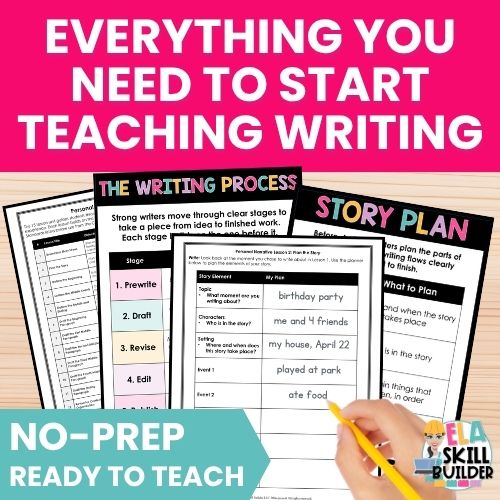
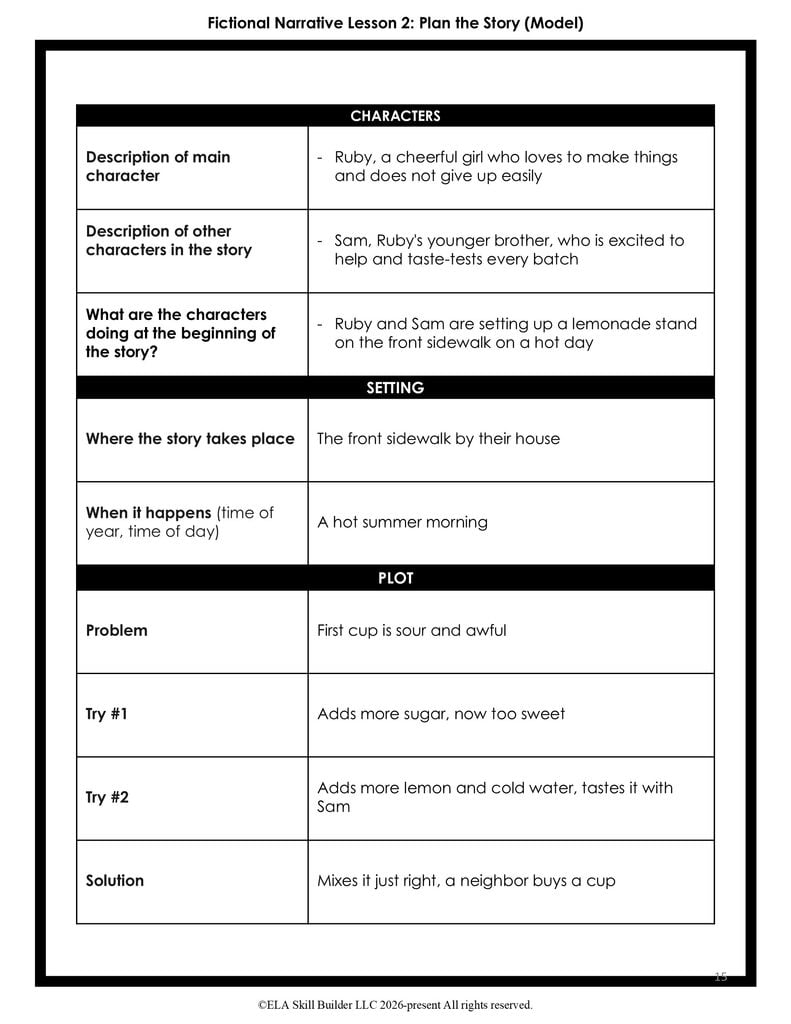
For example, if you’re teaching kids how to plan a fictional narrative, show them how to complete a story planning organizer.
Think aloud as you brainstorm your main character, setting, problem, and solution. Explain why you’re choosing certain ideas and how they fit together to create a story.
You might say, “My character, Ruby, is setting up a lemonade stand with her brother. But every good story needs a problem! What if the lemonade tastes terrible? Now I need to think about what Ruby could do to fix it.”
As you explain your thinking, fill in the organizer so kids can see how to plan their own stories.
This kind of modeling helps kids understand exactly what they’re expected to do before trying it themselves.
And here’s a tip: Prepare your modeling sample before the lesson!
Having a completed example ready makes teaching easier and helps you stay focused on the skill you’re teaching.
Step 3: Give Kids Time to Write
Now it’s time for kids to apply the skill to their own writing.
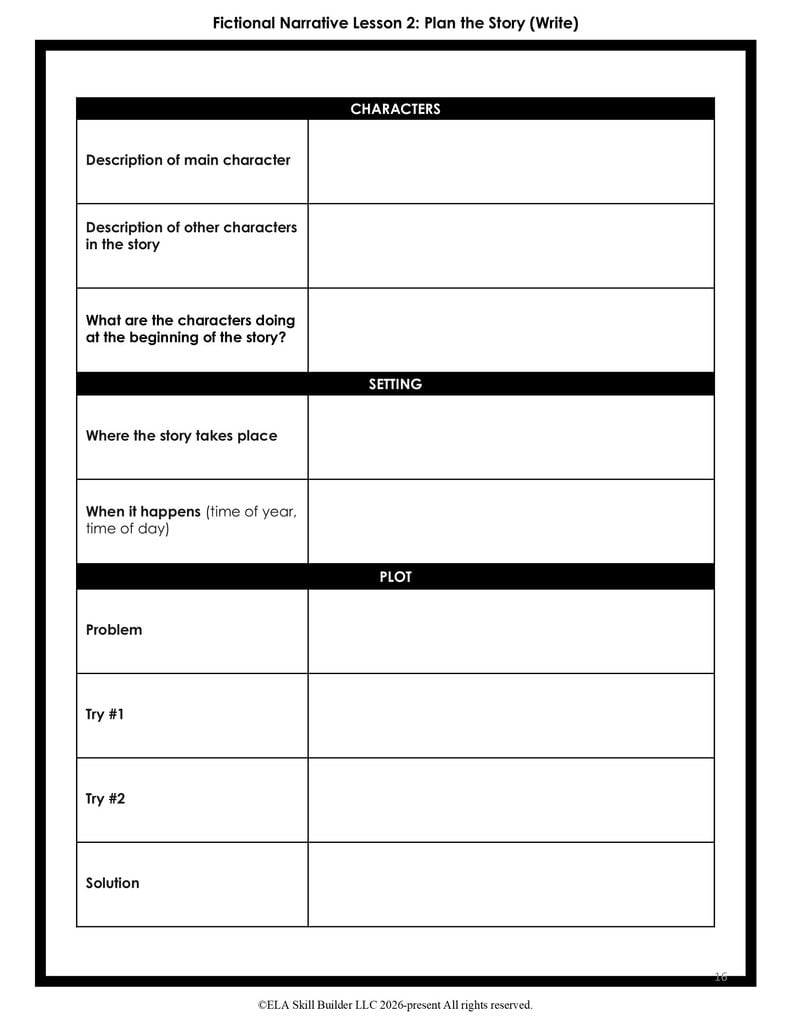
For example, after watching you model how to plan a fictional narrative, kids can complete their own story planning organizers.
They’ll brainstorm their main characters, setting, problem, and solution, just like you demonstrated.
Remind kids that they don’t need to write complete sentences yet! Short notes and phrases are perfectly fine when planning a story.
What should you do while kids are working?
If you’re teaching in a classroom, circulate around the room and provide help where it’s needed.
If you’re homeschooling, sit with your child while they get started, then gradually step back as they become more independent.
In either setting, focus your feedback on the skill you taught that day.
For example, if kids are planning a fictional narrative, you might ask, “What problem will your character face?” or “How will your character try to solve that problem?”
The goal is to help kids develop a clear plan they can use when it’s time to write their stories.
You don’t need to spend hours teaching writing!
Here’s a simple way to organize your time:
- Teach and Model (10–15 minutes): Introduce one skill and demonstrate how to use it.
- Write (15–30 minutes): Give kids time to apply the skill to their own writing.
- Optional Share (5 minutes): Invite kids to share something they wrote or explain how they used the skill.
You can adjust the timing based on your kids’ ages and needs.
And remember, the Write step doesn’t always mean drafting sentences or paragraphs. Sometimes kids will be brainstorming, planning, revising, or editing, depending on the lesson.
The most important thing is to provide regular opportunities to learn and practice writing skills.
2. Know What Writing Skills to Teach
Once you have a simple routine, the next question is: What should you actually teach?
This is where having a clear plan makes a big difference.
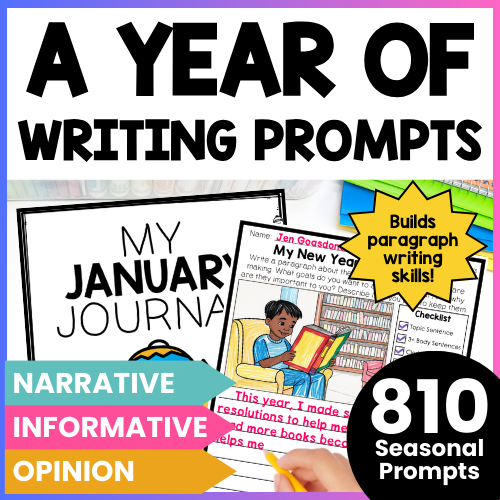
Rather than choosing random writing prompts or activities each week, I recommend organizing your lessons into units that focus on different types of writing.
Teach Different Types of Writing
Throughout the year, give kids opportunities to learn several types of writing:
- Personal Narrative: Writing about a real experience.
- Fictional Narrative: Creating a made-up story with characters, a setting, and a problem.
- Informational Writing: Teaching readers about a topic using facts and explanations.
- Opinion Writing: Sharing an opinion and supporting it with reasons.
- Argumentative Writing (Grades 6–8): Developing a claim and supporting it with logical reasoning and evidence.
For grades 1–5, I recommend focusing on personal narrative, fictional narrative, informational, and opinion writing.
For grades 6–8, argumentative writing takes the place of the elementary opinion writing unit.
Rather than switching between types of writing every few days, spend several weeks focusing on one type.
This gives kids time to learn the structure, practice specific skills, and create a complete writing piece.
Follow a Clear Scope and Sequence
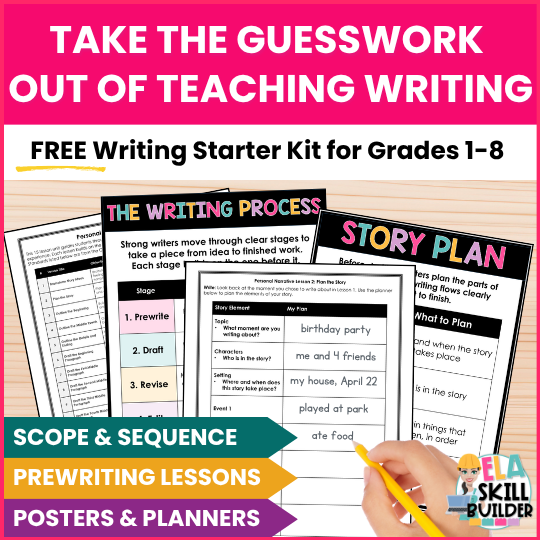
A scope and sequence is simply a plan that outlines which writing skills you’ll teach and the order you’ll teach them.
For example, you might begin the year by introducing the writing process and what makes writing effective.
Then move into your writing units, teaching one skill at a time as kids work toward completing their writing pieces.
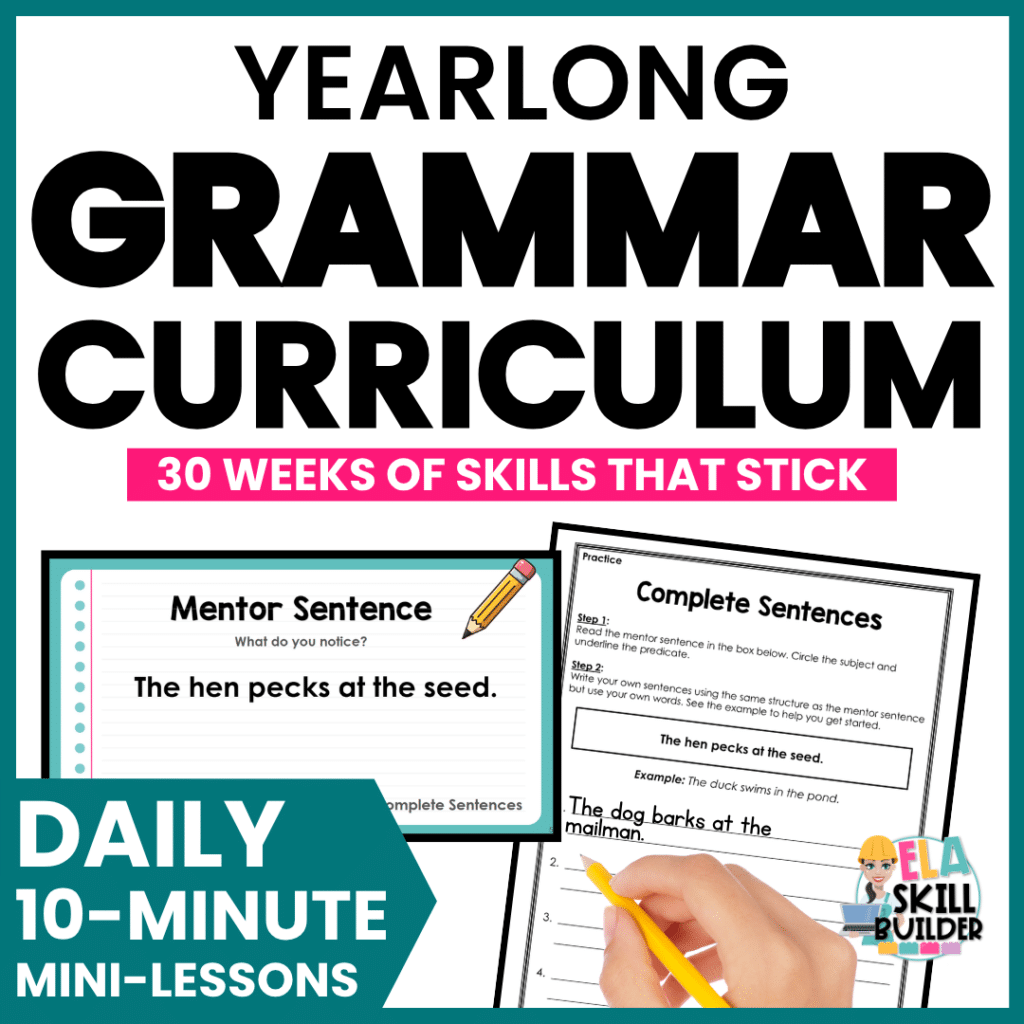
In my Yearlong Writing Curriculum, I’ve organized instruction into 30 weeks of step-by-step lessons, so you don’t have to figure out what to teach next.
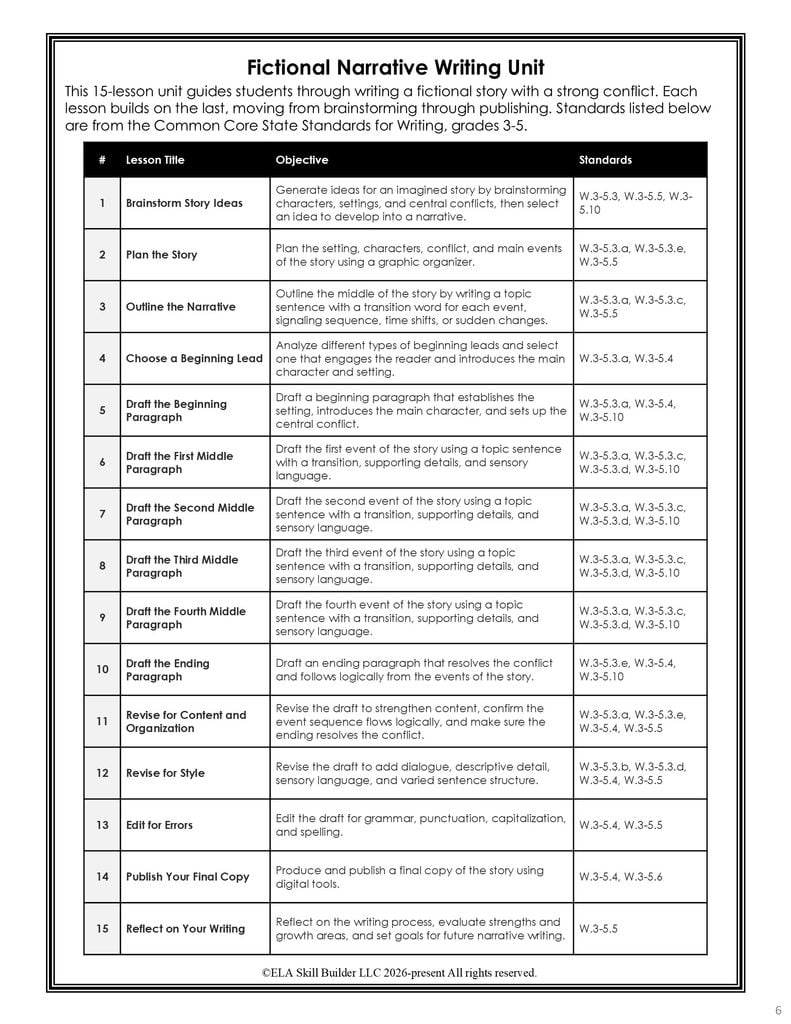
Focus on the Qualities of Strong Writing
I also recommend using the 6+1 Traits of Writing to help choose which writing skills to teach.
These traits describe the qualities of effective writing:
- Ideas: Developing clear ideas with meaningful details.
- Organization: Arranging ideas in a logical order.
- Voice: Letting the writer’s personality and purpose come through.
- Word Choice: Choosing precise, meaningful words.
- Sentence Fluency: Writing sentences that flow smoothly.
- Conventions: Using correct grammar, spelling, and punctuation.
- Presentation: Creating a finished piece that’s neat and easy to read.
You don’t need to teach all seven traits at once!
Instead, focus on individual skills related to these traits throughout your writing lessons.
For example, one lesson might focus on adding supporting details, while another teaches kids how to improve word choice.
Remember, one skill at a time!
3. Guide Kids Through the Writing Process
One mistake I made early in my teaching career was expecting kids to complete writing assignments without enough instruction along the way.
But writing isn’t something kids should be expected to finish in one sitting.
It’s a process!
I recommend teaching kids to work through five main stages.
Prewriting: Brainstorm and Plan
Before kids begin writing, help them come up with ideas and organize their thoughts.
For a fictional narrative, this might mean planning characters, a setting, a problem, and a solution.
Graphic organizers can be especially helpful because they give kids a clear place to record their ideas.
Drafting: Turn Ideas Into Writing
Once kids have a plan, teach them how to turn their ideas into sentences and paragraphs.
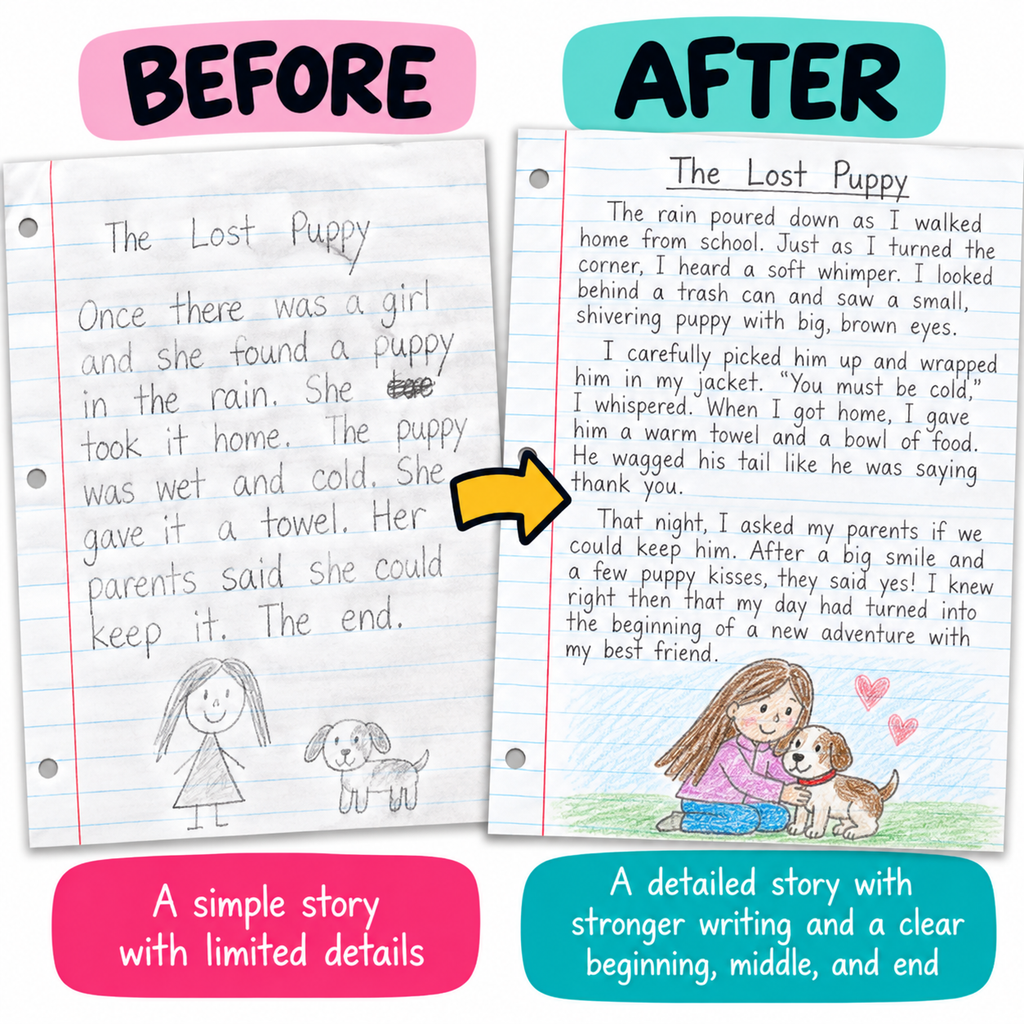
This is where you can focus on skills such as writing interesting beginnings, developing paragraphs, and adding supporting details.
The goal isn’t to write a perfect first draft. It’s to get ideas onto paper!
Revising: Make the Writing Stronger
Revising means improving the content of a writing piece.
Kids might add details, improve word choice, or strengthen their beginnings and endings.
Instead of simply telling kids to “make your writing better,” teach them one specific revision strategy at a time.
Editing: Correct Mistakes
Editing focuses on fixing spelling, capitalization, punctuation, and grammar mistakes.
Teach kids how to reread their writing and check for specific errors.
A simple editing checklist can help them become more independent.
Publishing: Share the Finished Writing
Finally, give kids opportunities to create and share a finished piece.
This might mean writing a neat final copy, typing their work, adding illustrations, or reading their writing aloud.
Publishing gives kids a reason to take pride in their work!
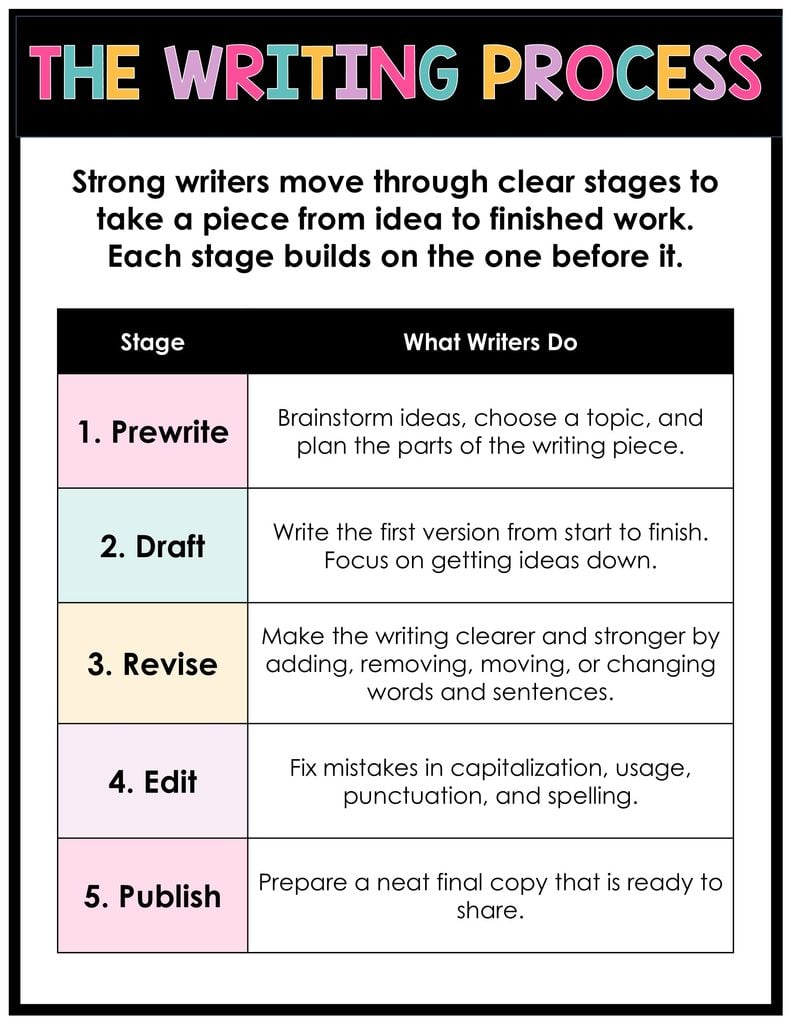
Here’s an important tip: If you’re teaching a classroom, consider keeping everyone working on the same stage of the writing process.
When I first started teaching, I had some students planning, others drafting, and a few already publishing. It was difficult to provide focused instruction when everyone needed something different!
Keeping my class on the same stage made it much easier to teach one skill at a time while still providing individual support.
And if you’re homeschooling, guiding your child through one stage at a time can make longer writing assignments feel much more manageable.
4. Make Writing Instruction Consistent
If there’s one thing I’ve learned from teaching writing, it’s that consistency makes a big difference.
Kids need regular opportunities to learn writing skills, watch those skills being modeled, and apply them in their own writing.
And the good news is that you don’t need to create elaborate lessons every day.
Once you have a clear plan and a simple daily routine, writing instruction becomes much easier to manage.
Here are a few ways to keep things running smoothly:
- Keep materials organized. Use a writing folder or binder to store planning pages, drafts, and finished pieces.
- Establish clear expectations. Teach kids how to get started, work independently, and ask for help.
- Give focused feedback. Rather than correcting everything, choose one specific skill for kids to improve.
- Use simple rubrics. Rubrics help you evaluate finished writing and show kids what strong writing looks like.
- Celebrate progress. Give kids opportunities to share their writing and recognize the skills they’re developing.
You don’t have to do everything perfectly.
Start with a few writing lessons each week and work toward a consistent routine that fits your schedule.
Try My FREE Fictional Narrative Writing Lessons!
Want to see what the Teach, Model, Write routine looks like in an actual writing lesson?
If you’re ready to make writing instruction more manageable, I’d love for you to try a few lessons for yourself!
Download my FREE Fictional Narrative Writing Lessons and see what explicit, step-by-step writing instruction can look like in your classroom.
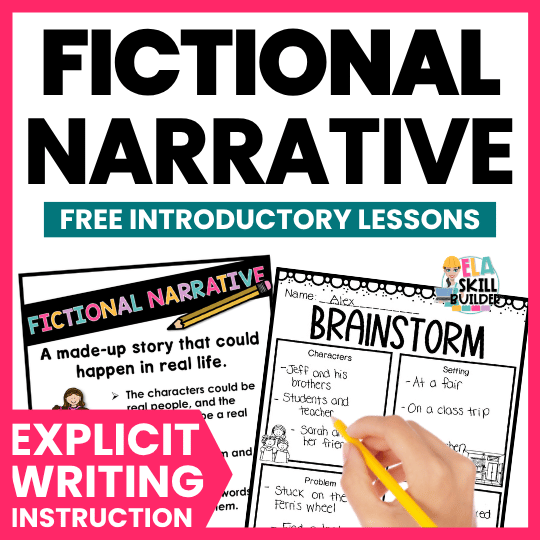
You’ll get a chance to try teaching one writing skill at a time, modeling the skill for your students, and giving them opportunities to apply what they’ve learned.
Download Your FREE Fictional Narrative Writing Lessons Here!
You might be surprised by how much smoother writing time can feel when you and your students have a clear plan to follow!
Teaching Writing Doesn’t Have to Be Overwhelming
Teaching writing can feel challenging, especially when you’re working with kids who have different abilities and need different levels of support.
But effective writing instruction doesn’t have to be complicated.
When you teach one skill at a time, model it clearly, and give kids opportunities to practice, you’re helping them develop the skills they need to become stronger writers.
Start small. Choose one type of writing, establish the Teach, Model, Write routine, and focus on helping kids make progress one lesson at a time.
You might be surprised by how much smoother writing time becomes when you have a clear plan to follow!
About Jen Goasdone
Jen Goasdone is a certified elementary teacher, a mom, and the founder of ELA Skill Builder LLC. After years in the classroom and years more creating writing curriculum, she knows how hard it can be to teach writing without a clear plan. She creates simple, step-by-step writing and grammar resources that help homeschool parents teach with confidence, even without a teaching background.