I used to spend about 30 minutes a day teaching grammar to my students. We did all the things: worksheets, grammar stations, correcting sentences, you name it. But no matter how much time I spent, I wasn’t seeing the results I hoped for in my students’ writing. Their sentences were still choppy. Their grammar errors kept showing up. And I remember thinking, What am I missing?
It wasn’t until I started helping my husband with research for his grad school project on best practices for grammar instruction that things finally clicked. As I looked more into the research, I realized I’d been making some big mistakes in how I was teaching grammar. And to be honest, I don’t think I’m the only one.
If you’ve ever felt frustrated that your grammar lessons don’t seem to transfer into your students’ (or your child’s) actual writing, this post is for you. Let’s walk through 5 of the biggest mistakes teachers and homeschool parents often make when teaching grammar, and what to do instead.
Mistake #1: I spent almost my entire writing block just teaching grammar.
At first glance, it might sound admirable to devote a solid 30 minutes a day to grammar instruction. Who doesn’t want their students to master parts of speech and punctuation, right?
But here’s the truth: I was using most of my writing time on grammar mini-lessons and worksheets, which left hardly any time for actual writing. To be honest, I didn’t even mind it at the time. Writing felt so hard to teach, and grammar felt more structured. So I filled the block with what felt easier. Guilty!
What I Learned: Grammar Should Support Writing, Not Replace It
Over time, I realized what a disservice I was doing. My students weren’t getting enough time to write, revise, or apply what they were learning. That’s when I started restructuring my whole approach.
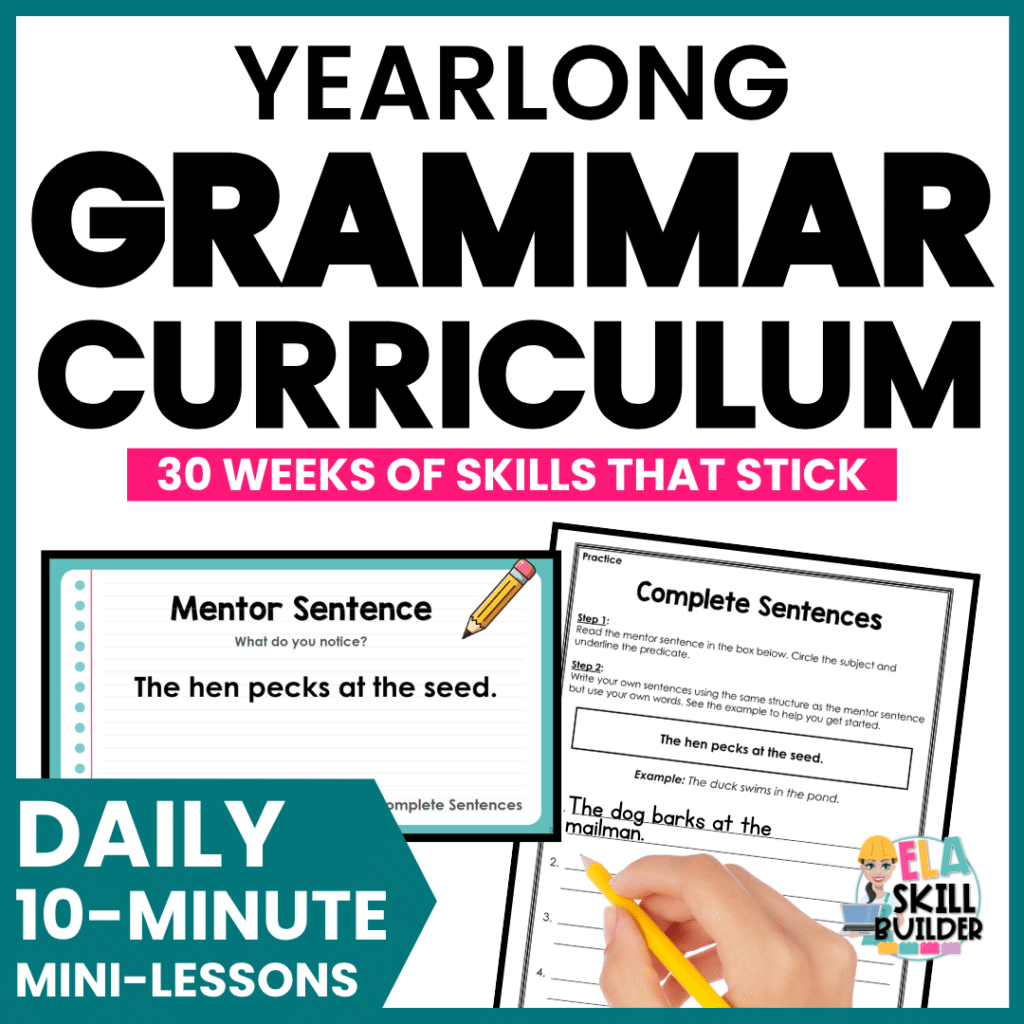
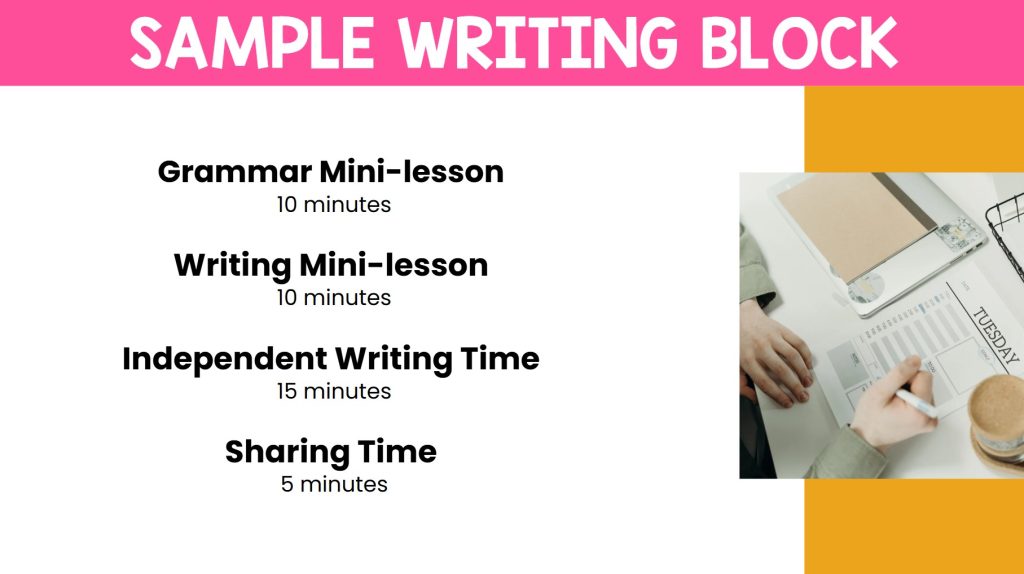
Now, grammar gets just 10 focused minutes at the start of the block. Then we move into writing time, where students are expected to apply the grammar skill in their own writing. That’s where the real growth happens.
Mistake #2: I thought students had to master grammar rules before they could apply them well in writing.
For the longest time, I believed this. I thought if I could just get students to memorize the rules, what a preposition was, how to use commas, when to capitalize, they would naturally start applying them in their writing. So I’d go over rules and examples, then hand out worksheets to practice identifying parts of speech or correcting punctuation.
But even with all that practice, those skills rarely showed up in actual writing unless I specifically reminded or prompted for them. They might do well on a worksheet, but when it came to applying the skill independently in their own stories or essays, it just didn’t stick.
What I Learned: Students Need to See Grammar in Real Writing First
It wasn’t until I dug into best practices that I realized how backwards my approach was. Research shows that students learn grammar more effectively when they see it used in context, in actual writing.
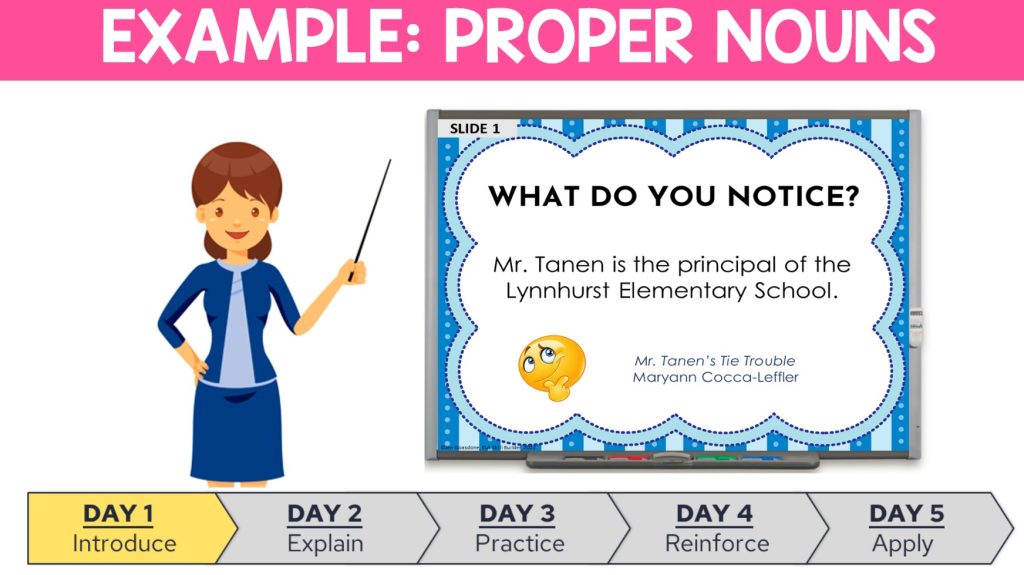
That’s the idea behind the Notice step in day 1 of my curriculum’s routine. Instead of handing students a list of rules, I start by having them notice a skill inside a real, well-crafted sentence, then teach the skill directly from what they’ve already observed.
For example, when introducing proper nouns, I might use this sentence: “Mr. Tanen is the principal of the Lynnhurst Elementary School.” We’d zero in on “Mr. Tanen” and “Lynnhurst Elementary School,” and students explore how those specific names give the sentence clarity and meaning. They aren’t just memorizing a rule about proper nouns, they’re discovering it.
This approach is so much more engaging and effective. Students feel like real writers analyzing real writing. Because they understand the purpose of the skill, they’re far more likely to use it in their own work.
Mistake #3: I mostly used grammar practice that focused on correcting errors.
For years, my grammar instruction revolved around worksheets where students had to fix mistakes in poorly written sentences. I believed this was helping them build accuracy, that seeing what’s wrong would naturally teach them to spot and avoid the same mistakes in their own writing.
What I Learned: Students Need to Practice Using Grammar Correctly, Not Just Spotting Mistakes
Error correction isn’t actually an effective way to build grammar skills, and it can be confusing and even counterproductive for younger writers. When students spend most of their practice time identifying and fixing errors, they often get stuck noticing what’s wrong instead of learning how grammar adds clarity and meaning. That’s not the outcome we want.
Instead, the best way to teach grammar is by showing quality examples of how real authors use it, then giving students a chance to practice the skill themselves. If the example sentence is “Mr. Tanen is the principal of the Lynnhurst Elementary School,” students might practice by writing their own sentence using proper nouns, something like “Mr. Brown is my teacher at Bear Creek School.”
After modeling it together, students can pair up or write independently to build their own practice sentences. This helps them internalize the skill and see how it adds clarity to their writing, without getting stuck trying to correct someone else’s mistakes.
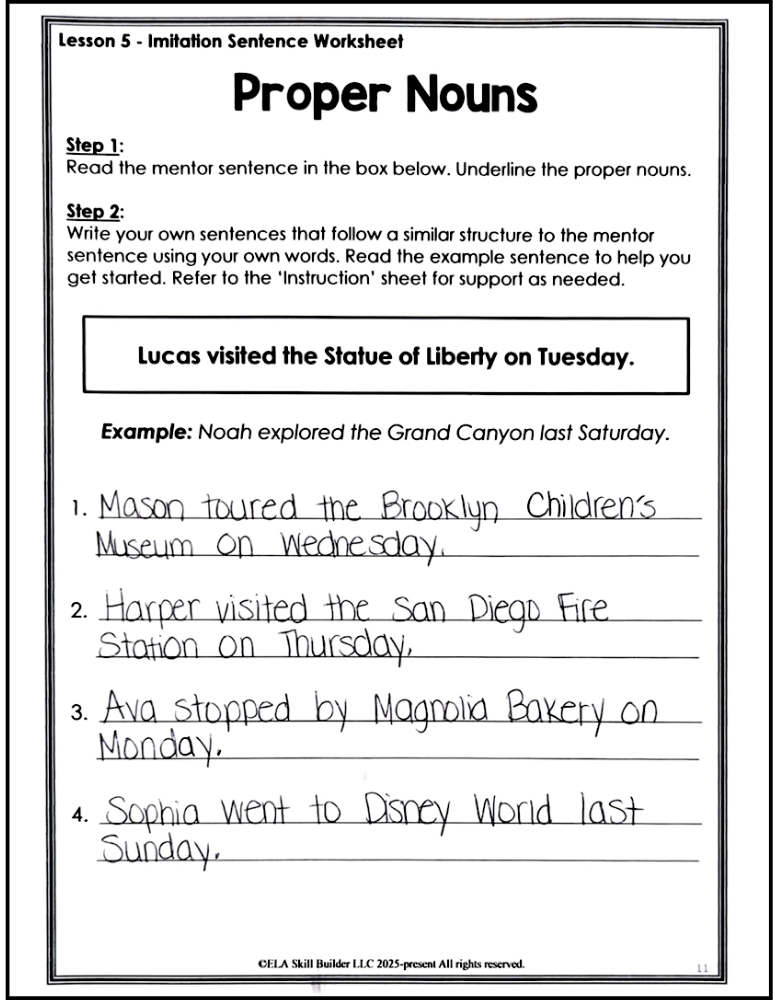
On Day 3 students can pair up or write independently to build their own imitation sentences. This helps them internalize the skill and see how it adds clarity and meaning to their writing.
Mistake #4: I used poor assessments to teach grammar.
At first, my go-to grammar assessments were worksheets where students had to identify parts of speech or correct errors in isolated sentences. I believed that if students could recognize the skill on a worksheet, that meant they truly understood it.
What I Learned: Use Authentic Assessment That Focuses on Application
Being able to identify a skill isn’t the same as being able to use it, and worksheet recognition wasn’t actually checking what mattered: whether students could apply the skill in their own writing.
The shift came when I started assessing grammar differently. Instead of testing grammar in isolation, I gave students a writing prompt and asked them to respond using the skill we’d been working on.
For example, if the skill was proper nouns, I might prompt students to write three sentences, encouraging them to include specific names of people and places to add clarity and detail. This way, I could see not just whether they recognized the skill, but whether they could actually use it to improve their writing. Authentic assessments like these give a clearer picture of understanding and help guide next steps, whether that’s what to reteach in class or what to revisit at home.
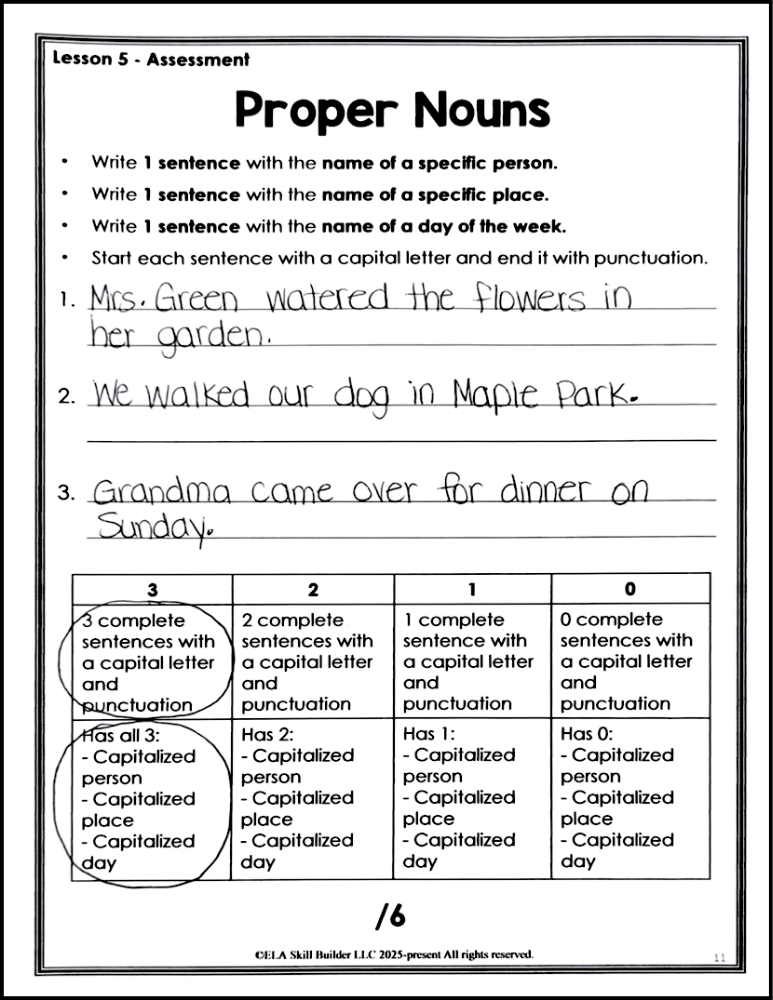
Assess students by having them write sentences in response to a prompt, ensuring they apply the targeted grammar skill – in this case, proper nouns.
Mistake #5: I thought teaching grammar in context would take too much extra planning and time.
Even after I understood everything above, one belief still held me back for a while: I assumed that teaching grammar in context, would mean way more prep.
What I Learned: I can use a simple, repeatable routine to teach each skill in context.
Once I had a consistent, repeatable routine to follow each week, grammar instruction actually took less time and planning than the old worksheet-and-drill approach, not more.
Just 10 focused minutes a day, following the same five steps each week, was enough to see real change in how students used grammar in their writing. No extra planning marathon required.
Here’s what that routine actually looks like, day by day:
Day 1: Notice the skill in a mentor sentence
Day 2: Teach the skill with an anchor chart
Day 3: Practice the skill with an imitation sentence worksheet
Day 4: Apply the skill in authentic writing
Day 5: Assess the skill in an authentic assessment
👉 I break this whole routine down step-by-step in The 10-Minute-a-Day Grammar Routine That Actually Improves Student Writing, if you want to see it in action.
Grab it: 5-Day Adjectives Lesson
Ready to help your students actually use grammar in their writing, at school or at home?
Grab this free, classroom-and-homeschool-tested 5-day adjectives lesson that uses this exact routine.
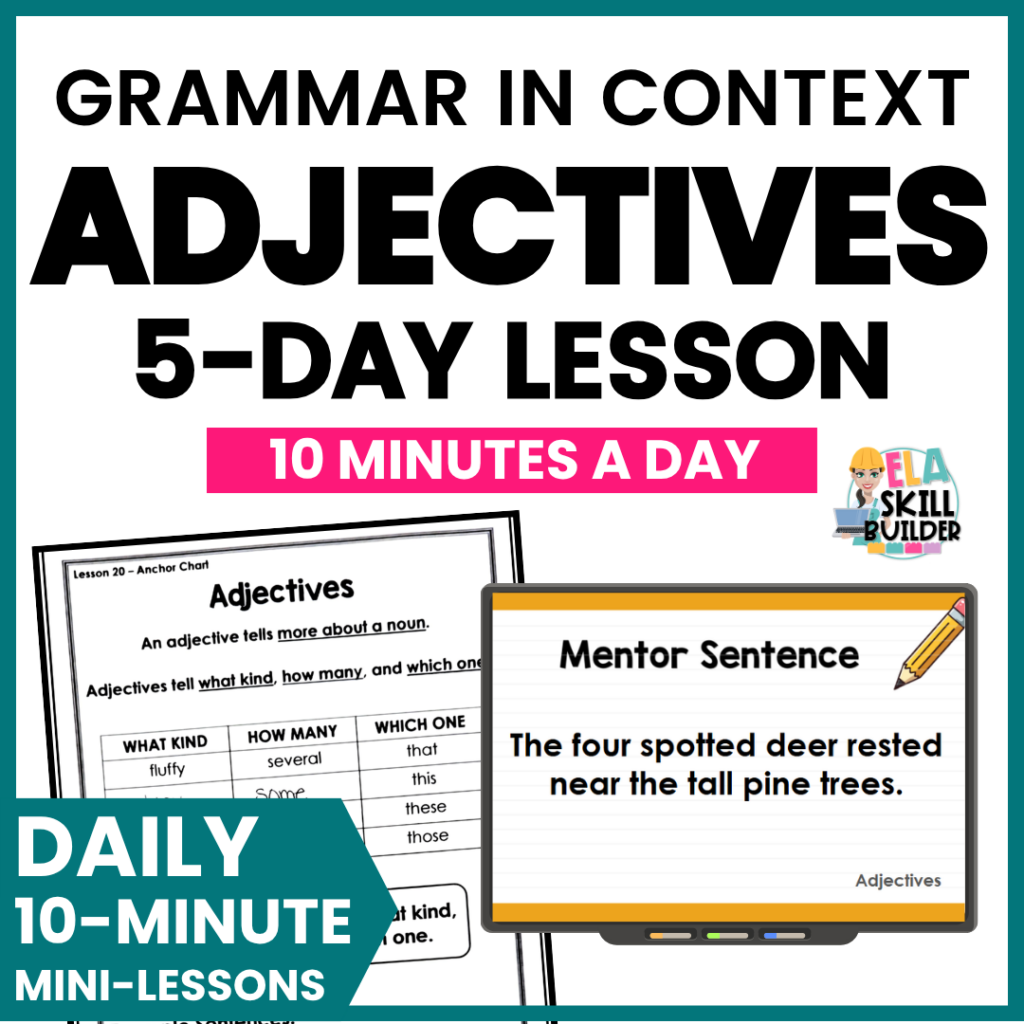
👉 Download this adjectives lesson now and start seeing the difference in your students’ writing.
Conclusion
I’ve been there, making these mistakes, thinking I was doing what was best for my students and my own kids. But I’ve learned that a lot of teachers and homeschool parents are in the same boat, teaching grammar the “old way” because that’s what feels familiar, or because they assume a better way means more work. The good news is, it doesn’t.
No more isolated drills or endless worksheets, and no more extra hours of planning. Just confident writers who understand grammar because they’ve noticed it, practiced it, and applied it, again and again.
Here’s to teaching smarter, not harder, and to learners who love writing because they get it.
About Jen Goasdone
Jen Goasdone, the owner of ELA Skill Builder, is a dedicated educator committed to empowering teachers and homeschool parents with simple, research-based strategies for effective writing instruction. With a focus on making ELA teaching easier and more doable, Jen helps kids build a strong writing foundation that will serve them for years to come. Passionate about both grown-up and student success, she strives to make writing instruction enjoyable and effective for elementary learners, wherever they’re being taught.