I still remember what writing time looked like during my first few years of teaching second grade.
I’d give my students a writing assignment, explain what I wanted them to do, and send them off to write.
Within minutes, hands would start going up.
“I don’t know what to write!”
“I’m done! What do I do now?”
“Can you help me?”
Before I knew it, I was running around the classroom trying to help everyone. Some students were still brainstorming, others were halfway through their drafts, and a few were already asking what they should work on next.
Writing time felt chaotic, and despite all the effort I was putting into teaching writing, my students weren’t making the progress I wanted to see.
Eventually, I realized something important: My students didn’t just need more opportunities to write. They needed more explicit writing instruction.
I started breaking writing instruction into smaller, manageable lessons, modeling each skill, and keeping my students working toward the same goal.
And what a difference it made!
Writing time became more manageable, my students became more independent, and the quality of their writing improved.
Looking back, I can see several mistakes I was making that made writing instruction harder than it needed to be.
If writing time in your classroom feels overwhelming, here are five common writing instruction mistakes you might be making and what you can do instead!
Mistake #1: Giving Writing Assignments Instead of Teaching Writing
One of the biggest mistakes teachers make is assuming that giving students writing assignments is the same as teaching them how to write.
For example, you might give your students a prompt that says, “Write a story about a time you went on an adventure.”
Sounds simple enough, right?
But think about everything students need to know to complete that assignment.
They need to brainstorm ideas, organize their thoughts, write an interesting beginning, develop the events, add descriptive details, and create a satisfying ending.
That’s a LOT to expect from students who haven’t been explicitly taught those skills!
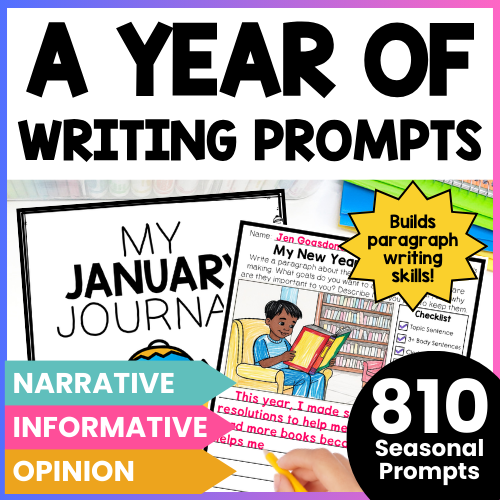
Writing prompts are great for giving students opportunities to practice, but they don’t replace actual writing instruction.
And simply telling students to “add more details” or “make your writing more interesting” isn’t enough either. Students need to be shown exactly HOW to do those things.
What to Do Instead: Teach One Writing Skill at a Time
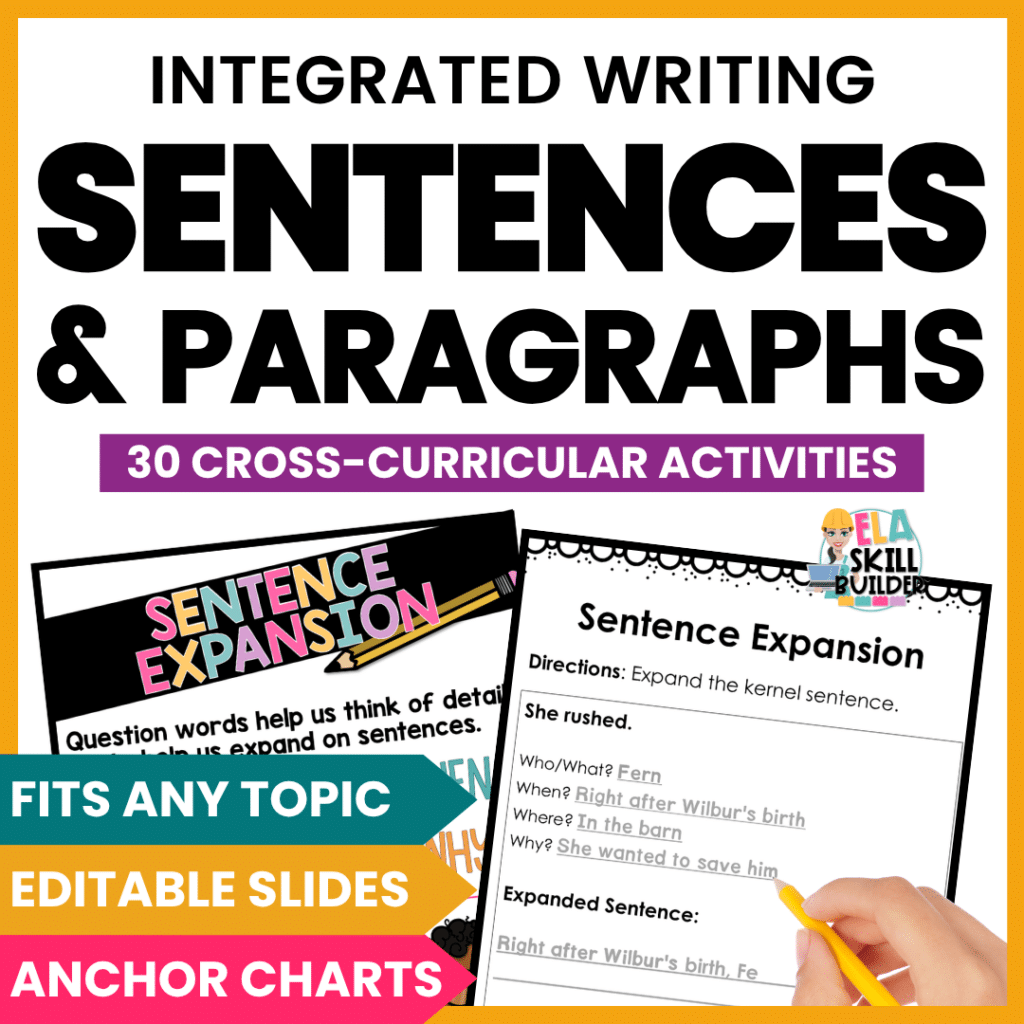
Rather than asking students to write an entire story without much guidance, break the writing process into smaller, manageable skills.
For example, when teaching fictional narrative writing, you might spend one lesson teaching students how to develop a main character. The next lesson could focus on creating a setting. Another lesson might teach students how to write an interesting story beginning.
Start each lesson by explaining the skill and showing students an example.
Then practice the skill together before having students apply it to their own writing.
The goal is to teach students HOW to write, not just give them something to write about.
When students receive explicit instruction in individual writing skills, they’re better prepared to apply those skills to longer writing pieces.
Mistake #2: Having Students Work on Different Stages of Writing at the Same Time
This was one of the biggest challenges I faced when I first started teaching writing!
I’d let students move through the writing process at their own pace.
Some students were brainstorming, others were drafting, a few were revising, and others were ready to publish.
It sounded like a great way to give students independence.
But in reality, I spent most of writing time running from one student to another, trying to provide completely different kinds of support.
One student needed help coming up with ideas. Another needed help organizing a paragraph. Someone else wanted me to check their spelling.
And while I was helping one student, several others were waiting for my attention.
It was exhausting!
What to Do Instead: Keep Your Class Working Toward the Same Writing Goal
One of the changes that made the biggest difference in my classroom was keeping my students working on the same stage of the writing process.
For example, if we were learning how to write an interesting story beginning, everyone was working on their story beginning that day.
We started with a whole-class mini-lesson where I modeled the skill. Then students practiced applying it to their own writing.
Of course, students still worked at different levels and needed different amounts of support.
Some students wrote a few sentences, while others wrote an entire paragraph. Some needed extra guidance, while others were ready for a challenge.
But everyone was focused on the same skill.
This made it SO much easier to provide targeted instruction, answer questions, and support students without feeling pulled in a dozen different directions.
Students don’t have to produce the same amount of writing to benefit from learning the same skill together.
This approach isn’t the only effective way to organize writing workshop, but it was a game changer for my classroom!
Mistake #3: Skipping the Planning and Revising Stages
Have you ever had students finish their rough drafts, correct a few spelling mistakes, and announce, “I’m done!”?
I know I have!
When writing time is limited, it’s tempting to move students through the writing process as quickly as possible.
But writing involves much more than getting words onto paper.
Strong writers plan their ideas, write drafts, revise their work, and edit for mistakes.
When students skip these stages, they miss valuable opportunities to develop their ideas and improve the quality of their writing.
And here’s something I think is especially important: Revising and editing are NOT the same thing!
Revising means improving the content of the writing. Editing means correcting mistakes in grammar, spelling, capitalization, and punctuation.
Students need explicit instruction in both.
What to Do Instead: Teach Each Stage of the Writing Process
Instead of expecting students to complete an entire writing piece in just a few lessons, give them time to work through each stage of the writing process.
Start by teaching students how to brainstorm and organize their ideas using graphic organizers.
Then model how to turn those ideas into a rough draft.
Once students have finished drafting, spend several lessons teaching specific revising skills.
For example, you might teach students how to add descriptive details, improve word choice, combine sentences, or strengthen their introductions and conclusions.
Finally, teach students how to edit their writing using a simple checklist.
And remember, you don’t need to teach every revising and editing skill at once!
Focus on one or two skills at a time so students have a chance to understand and apply what they’re learning.
The goal is to help students understand that good writing doesn’t usually happen on the first try. It’s something writers develop and improve over time.
Mistake #4: Teaching Writing Inconsistently
Between reading, math, science, social studies, and everything else you’re expected to teach, writing can easily get pushed to the bottom of the list.
Maybe you plan to teach writing after lunch, but your math lesson takes longer than expected.
Or perhaps writing gets skipped because you haven’t had time to prepare a lesson.
Before you know it, an entire week has gone by without much writing instruction.
And when you finally get back to writing, students seem to have forgotten what you taught them the week before!
The problem is that writing is a skill that requires consistent instruction and practice.
Just like students need regular opportunities to practice reading and math, they also need regular opportunities to develop their writing skills.
What to Do Instead: Create a Simple, Consistent Writing Routine
You don’t need an hour-long writing block every day to provide meaningful writing instruction.
A focused 20–30-minute writing routine can be a great starting point, especially if you’re struggling to fit writing into your schedule.
Here’s a simple routine you can try:
- Mini-Lesson (5–10 minutes): Teach one specific writing skill. Explain it, model it, and practice together.
- Writing Practice (15–20 minutes): Have students apply the skill to their own writing while you provide support as needed.
- Quick Share (2–5 minutes): Invite a few students to share something they wrote or explain how they used the skill.
You can adjust the timing based on your grade level and the needs of your students.
The most important thing is to make writing a regular part of your classroom routine.
And having your lessons planned out ahead of time makes this SO much easier!
When you already know exactly what you’re teaching each day, you’re much less likely to skip writing because you don’t have time to prepare.
Mistake #5: Trying to Teach Too Many Writing Skills at Once
Have you ever looked at a student’s writing and noticed about ten different things that needed improvement?
Maybe their sentences are incomplete, their ideas aren’t organized, they’re missing punctuation, and they haven’t included enough details.
It’s tempting to try to fix everything at once!
You might tell students to add more details, use stronger vocabulary, check their punctuation, improve their sentence structure, and make sure their paragraphs are organized.
But when students are trying to focus on too many things at once, writing can quickly become overwhelming.
Instead of mastering a specific skill, they end up trying to remember a long list of things they’re supposed to do.
And as teachers, we can end up feeling frustrated when students continue making mistakes we’ve already pointed out.
What to Do Instead: Focus on One Skill at a Time
One of the simplest ways to make writing instruction more effective is to narrow your focus.
Rather than trying to teach every writing skill in one lesson, choose one specific skill you want students to learn and apply.
For example, if you’re teaching students how to write informational paragraphs, you might spend one lesson teaching topic sentences.
During that lesson, model several examples of strong topic sentences, write one together as a class, and then have students practice writing their own.
The next lesson might focus on adding supporting details.
Another lesson could teach students how to write a concluding sentence.
Over time, students learn how these individual skills work together to create a complete paragraph.
The same principle applies when giving feedback.
If your lesson focused on adding descriptive details, make that the main focus of your feedback rather than correcting every mistake on the page.
Of course, students will still need instruction in spelling, grammar, punctuation, and other writing skills. But you don’t have to address everything in every lesson.
When you focus on one skill at a time, students have a better chance of understanding it, practicing it, and actually using it in their writing.
Make Writing Instruction Easier With a Clear Plan
If you’ve been making some of these writing instruction mistakes, you’re definitely not alone!
I made many of them during my first few years of teaching, and it took time to figure out what worked best for my students.
But once I started using explicit mini-lessons, modeling each writing skill, and keeping my students moving through the writing process together, writing time became so much more manageable.
And more importantly, my students became stronger, more confident writers.
You don’t need to completely overhaul your writing block or spend hours preparing elaborate lessons.
Sometimes, the biggest improvements come from making a few simple changes to the way you teach writing.
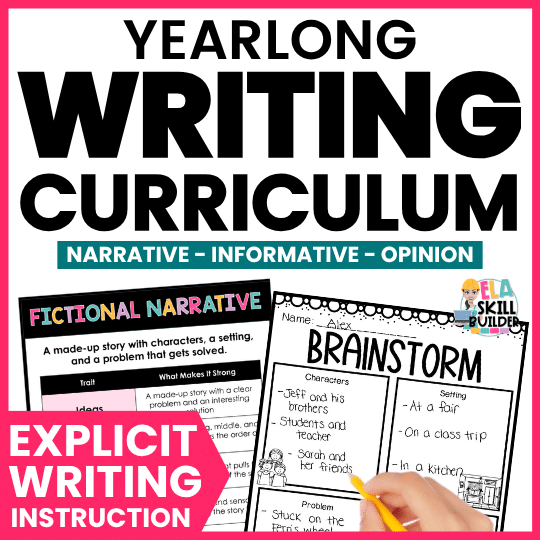
That’s exactly why I created my Yearlong Writing Curriculum.
It includes 30 weeks of step-by-step writing lessons, teacher models, graphic organizers, mentor texts, and everything you need to teach writing in a clear, organized way.
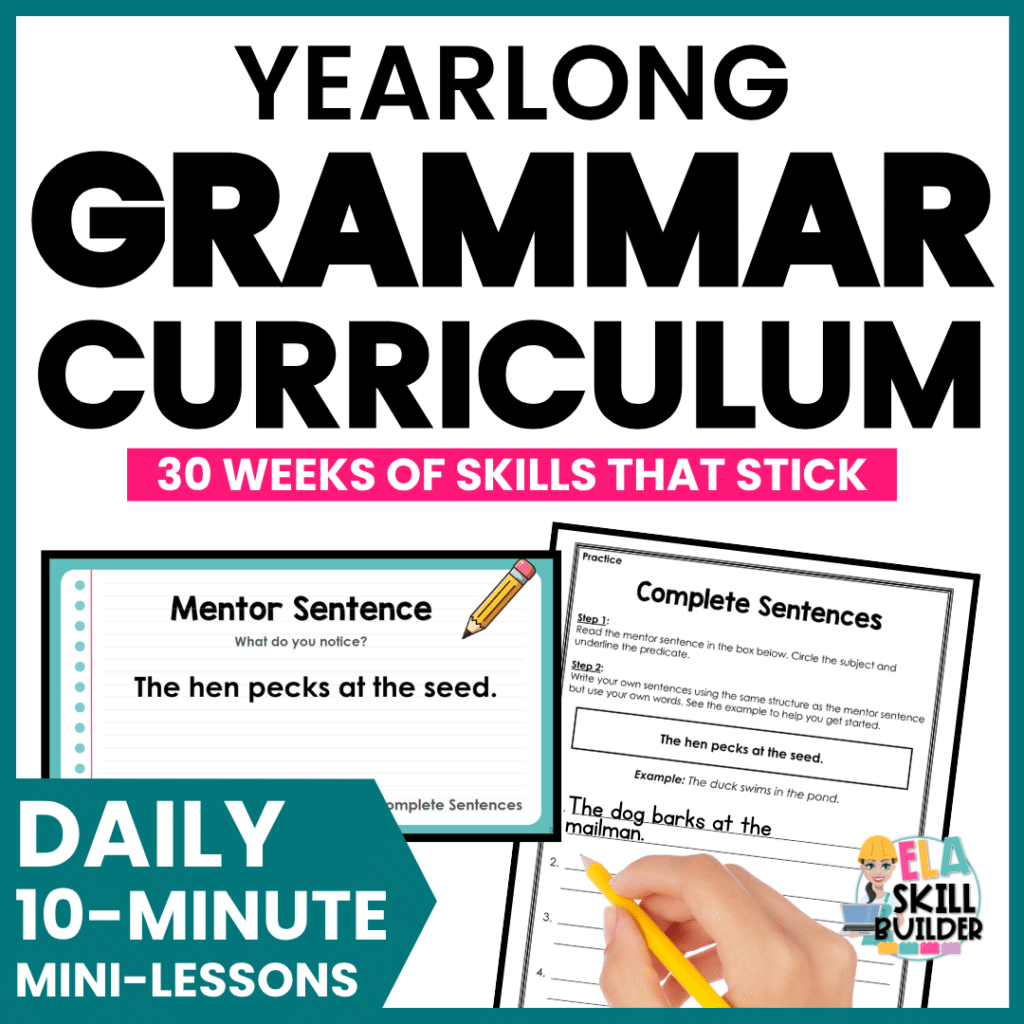
Each lesson focuses on a specific writing skill, so you can spend less time figuring out what to teach and more time helping your students become stronger writers.
Want to Try This Approach in Your Classroom?
If you’re ready to make writing instruction more manageable, I’d love for you to try a few lessons for yourself!
Download my FREE Fictional Narrative Writing Lessons and see what explicit, step-by-step writing instruction can look like in your classroom.
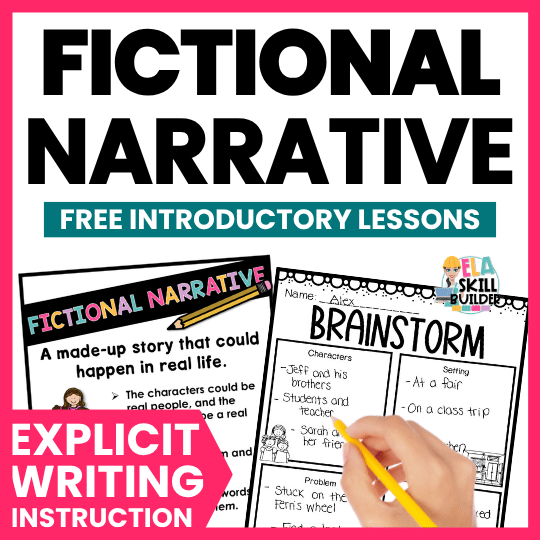
You’ll get a chance to try teaching one writing skill at a time, modeling the skill for your students, and giving them opportunities to apply what they’ve learned.
Download Your FREE Fictional Narrative Writing Lessons Here!
You might be surprised by how much smoother writing time can feel when you and your students have a clear plan to follow!
About Jen Goasdone
Jen Goasdone is a certified elementary teacher, a mom, and the founder of ELA Skill Builder LLC. After years in the classroom and years more creating writing curriculum, she knows how hard it can be to teach writing without a clear plan. She creates simple, step-by-step writing and grammar resources that help homeschool parents teach with confidence, even without a teaching background.